Skip to Content
Vehicle inspection guide

A Few Careful Minutes Can Protect Every Party.

Pickup contacts, delivery contacts, and carrier drivers should each inspect the vehicle, preserve their own photos, and keep a readable BOL. Independent records help everyone understand the condition before and after transport.

This guide supports documentation. It does not decide fault, liability, insurance coverage, payment, or repair authorization.
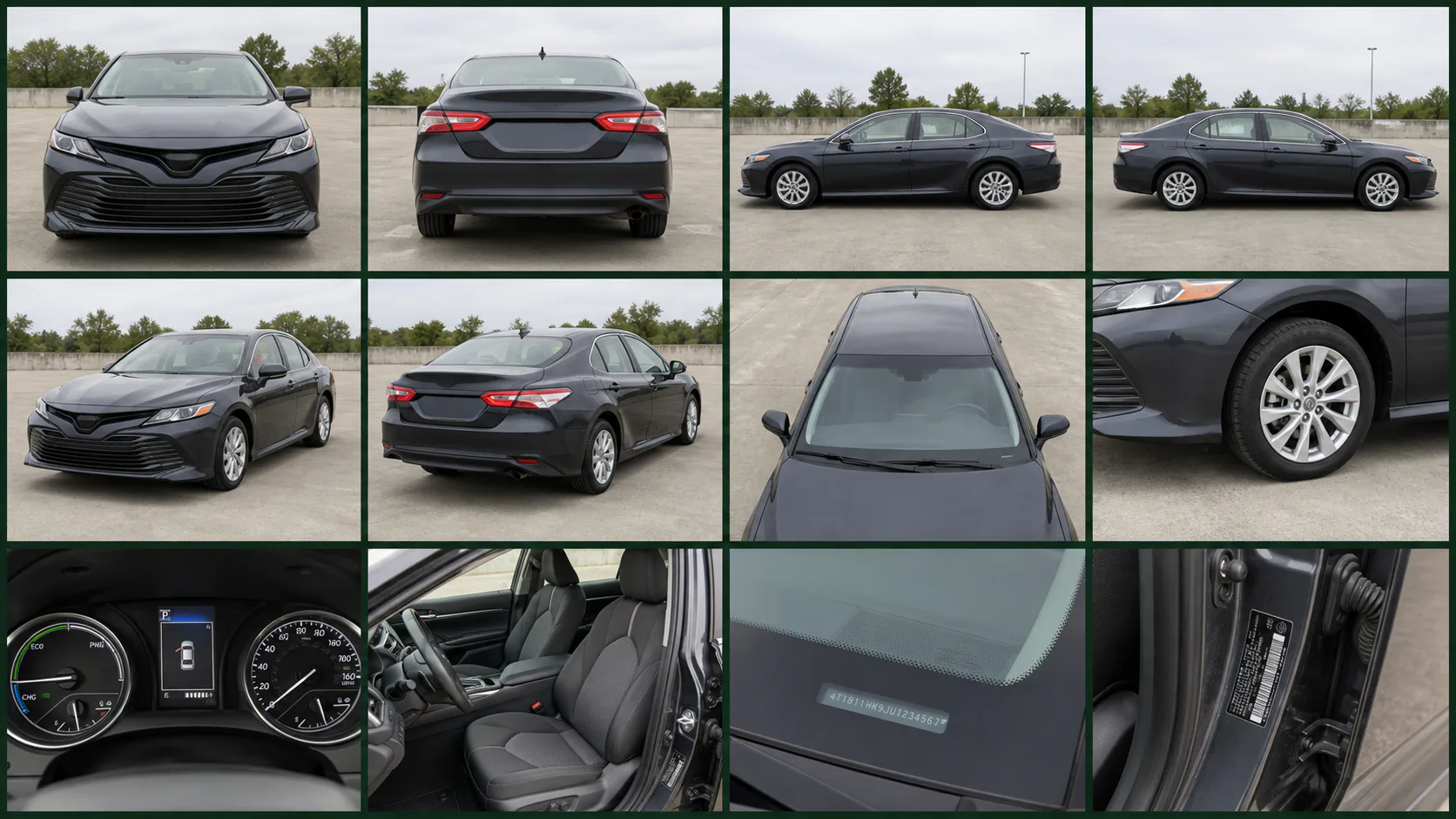
Twelve-photo vehicle inspection mosaic showing full vehicle angles, bumpers, wheels, interior, dashboard, and VIN locations
One vehicle. Multiple clear angles. Independent records.
01
Pickup person

Verify First. Release Second.

The person releasing the vehicle protects the owner and the transport record by confirming who is taking the vehicle and documenting its condition before it moves.

Your pickup photos may become the clearest proof of when damage occurred.

If the vehicle is later damaged but the pickup record is incomplete, unclear, or missing the required angles, it may be difficult to establish the earlier condition and an insurer may have less evidence when evaluating a claim. Invest a few minutes now: watch the driver's inspection, confirm the angles, and keep your own original photos.

1

Ask the Driver for the Gate or Release Code

Have the driver state the code first. Compare it with the code Fusion supplied to you. Never reveal the correct code first. If it is missing or does not match, do not release the vehicle; call Fusion Transports.

2

Match the VIN and Vehicle

Compare the VIN on the order or BOL with the lower windshield and driver-door-jamb VIN labels. Confirm year, make, model, color, keys, and obvious equipment differences.

3

Confirm the Driver Has a BOL and Inspection Method

The driver should have an electronic inspection workflow or a paper BOL. If technology fails, call Fusion and use the paper backup before the vehicle leaves.

4

Watch the Inspection, Then Make Your Own Record

Make sure the driver captures the required full-vehicle, corner, VIN, wheel, bumper, interior, dashboard, and damage-detail views. Independently take your own original photos and keep them.

5

Review Before You Sign

Read the pickup condition notes, add any disagreement before signing, keep a readable copy, and preserve your original files and messages.

02
Delivery person

Inspect Before You Sign and Before the Driver Leaves.

Use the pickup record as a comparison point, but create a separate delivery record of what you can actually see at the destination.

Your delivery record protects the right to question a new condition.

If you sign before comparing the vehicle or take only a few unclear photos, later damage can be difficult to connect to the transport timeline and an insurer may have less evidence to evaluate. Photograph the same angles used at pickup, note every difference before signing, and keep your own original files.

1

Make Time for the Delivery Inspection

Inspect after unloading and before the driver leaves. Use safe lighting and remove reasonable visual obstructions when possible.

2

Compare the Same Angles

Compare the pickup BOL and pickup images with full views, four corners, roof and glass, wheels, lower bumpers, interior, dashboard, odometer, and VIN at delivery.

3

Write Any Exception Before Signing

Do not sign a damage-free receipt if visible or suspected damage is missing from the document. Describe the exact area, approximate size, and any inspection limitations such as rain, dirt, darkness, or coverings.

4

Take Your Own Photos and Video

Do not rely only on the driver's device. Preserve original delivery photos and a short walkaround video when practical; do not edit or compress the originals.

5

Keep the Final BOL and Report Promptly

Obtain a readable final signed copy. If damage is suspected, keep the vehicle safe, avoid assigning blame or authorizing repairs, call Fusion, and submit the damage report.

03
Carrier driver

Inspect First. Move Second.

A complete pickup and delivery record protects the vehicle, the carrier, the customer, and the working relationship. Clear pre-existing-condition evidence can help prevent a carrier from being held responsible for damage it did not cause.

A weak pickup inspection can leave the carrier responsible for damage that was already there.

Wide views, the required angles, VIN photos, close condition details, notes, and a signed BOL create the timeline needed to distinguish pre-existing condition from new damage. Missing or low-quality evidence may weaken the carrier's defense and may affect how an insurer evaluates the claim.

1

Complete Every Assigned Super Dispatch Step

When the load uses a Super Dispatch inspection, capture the required pickup and delivery photos, notes, signatures, and BOL. Supported activity may carry time and location evidence when device permissions and the workflow allow it.

2

Record Pre-Existing Condition Precisely

Use clear, well-lit photos and specific notes. Include close-ups of damage plus wider context showing where it is on the vehicle.

3

Never Skip a Failed Step

If the app, link, signature, photo upload, or location is unavailable, call Fusion before leaving. Complete a paper BOL, signatures, and the same required photo angles as the documented backup.

4

Communicate Exceptions Immediately

Stop when the VIN, release code, vehicle condition, operability, access, or safety situation does not match. Do not guess, assign blame, promise repairs, or continue without direction when the difference affects the move.

5

Close the Load Carefully

Complete the delivery inspection after unloading, obtain the available acknowledgment, preserve both BOLs and original evidence, and answer Fusion ETA requests so customers receive useful updates without repeated calls.

Required photo standard

Show the Whole Vehicle, Then Show the Details.

Use consistent pickup and delivery angles. Photograph the VIN in two locations and include close-ups plus context for every existing or suspected damage area.

Inspection photo guide showing front, rear, both sides, corners, roof, wheels, lower bumpers, dashboard, interior, and two VIN locations
FrontRearDriver SidePassenger SideFour CornersRoof & GlassWheels & TiresFront & Rear Lower BumpersDashboardOdometer & Fuel/BatteryInteriorVIN: WindshieldVIN: Door JambEvery Damage Area
Add a short, steady walkaround video when practical.

Video can provide helpful context but does not replace the required still photographs, written condition notes, signatures, or BOL.

Electronic or paper backup

The BOL Connects the Inspection to the Move.

Use the assigned electronic BOL when available. If technology fails, contact Fusion Transports and complete a readable paper record with vehicle identity, pickup and delivery condition, exceptions, dates, names, and signatures.

  • Verify the VIN against the vehicle and order.
  • Write condition differences before either party signs.
  • Give each signing party a readable copy.
  • Preserve pickup and delivery versions with the original photos.
Something does not match?

Stop, Preserve the Evidence, and Contact Fusion.

Safety concerns, an undrivable vehicle, a VIN or release-code mismatch, visible damage, or a failed inspection workflow should be reported before the move continues whenever safe and practical.